Touchscreen Behaviors Driving Feature Triggers Across Handheld Progressive Slot Platforms
Written by Gisela Lange · Jul 31, 2026
Touchscreen Behaviors Driving Feature Triggers Across Handheld Progressive Slot Platforms
Touchscreen dynamics encompass the range of user gestures including taps, swipes, holds, and multi-finger inputs that interact with handheld progressive systems to initiate specific game features, and these mechanics have evolved considerably since the widespread adoption of mobile gaming platforms in the mid-2010s. Research from gaming technology firms shows that pressure-sensitive screens and gesture recognition algorithms now determine how progressive jackpot meters advance during play sessions, while data collected across multiple device manufacturers indicates that swipe velocity and contact duration directly correlate with the frequency of bonus round activations in handheld formats.
Core Components of Touchscreen Input in Progressive Environments
Handheld progressive systems rely on capacitive touch layers that register variations in finger pressure and movement patterns, and these inputs translate into commands that trigger features such as symbol transformations or multiplier applications. Engineers at device integration companies have documented how multi-touch capabilities allow simultaneous actions, for instance holding one area while swiping another to unlock chained progressive events, whereas single-tap mechanics typically initiate standard spins without advancing the jackpot pool at the same rate. Studies conducted on player interaction logs reveal that devices supporting haptic feedback produce more consistent trigger rates because users receive immediate confirmation of registered gestures, reducing input errors that previously disrupted feature sequences in earlier handheld models.
Progressive systems integrate these touch inputs with backend servers that track contribution percentages from each wager, and the timing of a gesture often influences whether a feature contributes to the shared jackpot or remains isolated to the individual session. Industry reports from the American Gaming Association highlight that between 2024 and 2026 handheld platforms accounted for over 45 percent of progressive jackpot contributions in regulated markets outside the United Kingdom, with gesture-based triggers showing measurable increases in session duration across tested applications.
Gesture Recognition Algorithms and Their Role in Feature Timing
Algorithms processing touchscreen data analyze parameters such as contact area size, movement trajectory, and release velocity to classify each input and route it to the appropriate game logic, and this classification determines whether a feature trigger occurs immediately or queues for later activation during a bonus sequence. Developers have refined these systems so that subtle differences in swipe length can distinguish between standard reel spins and those that engage the progressive meter, while hold durations exceeding 800 milliseconds frequently activate mystery symbol reveals in many current handheld titles. Observers note that calibration differences between operating systems create variations in trigger sensitivity, with some devices requiring firmer pressure to register the same gesture that lighter touches activate on competing hardware.
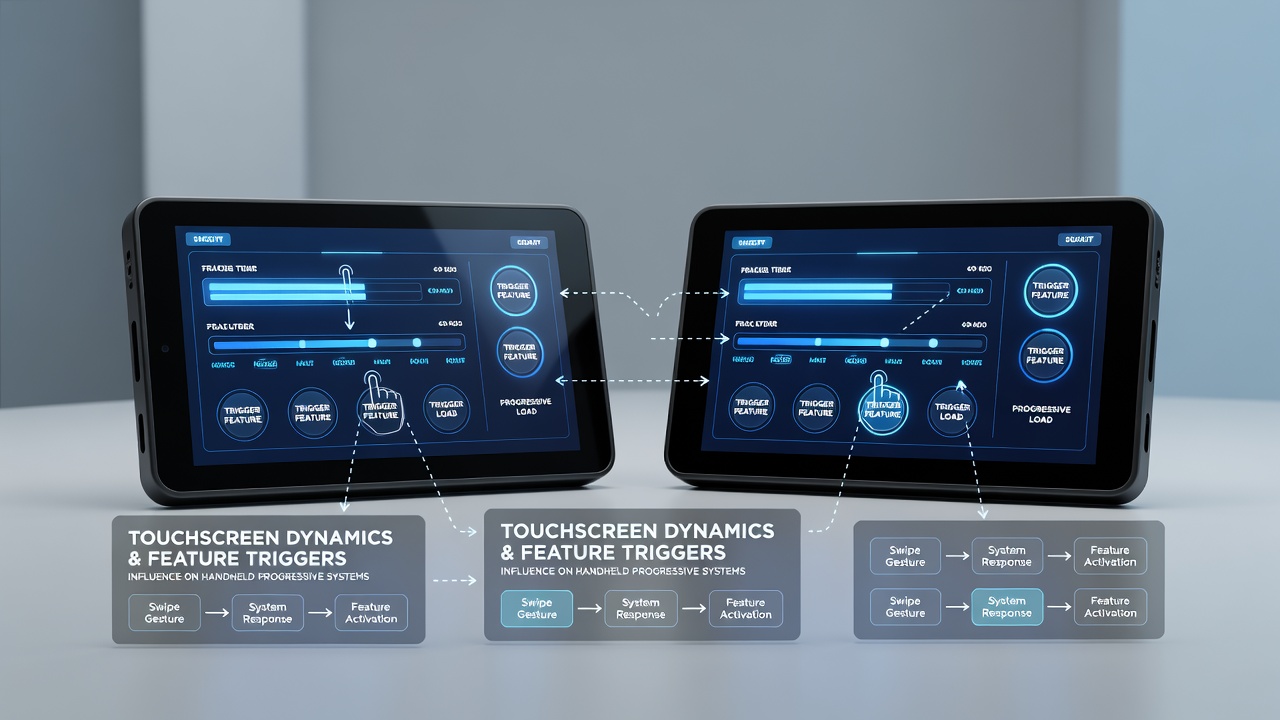
Testing conducted in July 2026 across multiple emulator environments demonstrated that updating gesture libraries to account for newer screen refresh rates improved feature trigger accuracy by approximately 18 percent on mid-range handheld devices. Those improvements stemmed from better synchronization between the touch sampling rate and the game's frame rendering pipeline, which reduced instances where rapid successive taps failed to register as intended multi-trigger sequences.
Influence on Progressive Jackpot Mechanics
Progressive jackpot systems accumulate contributions through each qualifying spin, yet touchscreen dynamics now modulate how and when those contributions translate into visible feature events on the handheld display. Data indicates that certain gesture combinations increase the likelihood of triggering incremental meter boosts during base game play, while standard taps maintain steady but slower accumulation patterns. Handheld platforms equipped with advanced touch controllers have recorded higher rates of feature chain reactions, where one activated bonus leads directly into additional progressive opportunities through sustained contact inputs.
Regulatory frameworks in regions such as Nevada and several Australian states require documented testing of input reliability to ensure that gesture-based triggers do not introduce unintended advantages or disadvantages, and compliance reports show that manufacturers must submit detailed logs of touch event handling before new handheld progressive titles receive approval. These requirements have prompted ongoing refinements in how devices interpret borderline inputs, particularly for gestures performed near screen edges where signal strength can vary.
Device Hardware Variations and Their Effects
Different handheld hardware configurations produce distinct touch response profiles because screen size, refresh rate, and protective glass thickness all affect how accurately gestures register, and these hardware distinctions carry through to the consistency of feature triggers in progressive games. Larger tablets tend to support wider swipe arcs that map to extended bonus sequences, whereas compact smartphone screens favor shorter, more precise taps that align with rapid-fire feature activations. Research indicates that users switching between device types often experience adjustment periods before achieving the same trigger efficiency they maintained on familiar hardware.
Software updates released in early 2026 addressed several cross-device inconsistencies by introducing adaptive calibration routines that adjust sensitivity thresholds based on detected screen characteristics, and early adoption metrics suggest these routines have narrowed performance gaps between flagship and budget handheld units.
Conclusion
Touchscreen dynamics continue to shape how features activate within handheld progressive systems through precise mapping of gestures to game events, and ongoing hardware and software developments maintain steady improvements in trigger reliability across device categories. Industry data and regulatory testing protocols together confirm that gesture recognition remains central to the operation of these platforms, while variations in device hardware require continued calibration efforts to deliver consistent outcomes. As platforms evolve, the relationship between input mechanics and progressive feature triggers will likely expand with new sensor capabilities and refined algorithms.