The Role of Random Seed Variations in Determining Demo Reel Outcomes for Casino Slots
Written by Gisela Lange · Jul 28, 2026

The Role of Random Seed Variations in Determining Demo Reel Outcomes for Casino Slots
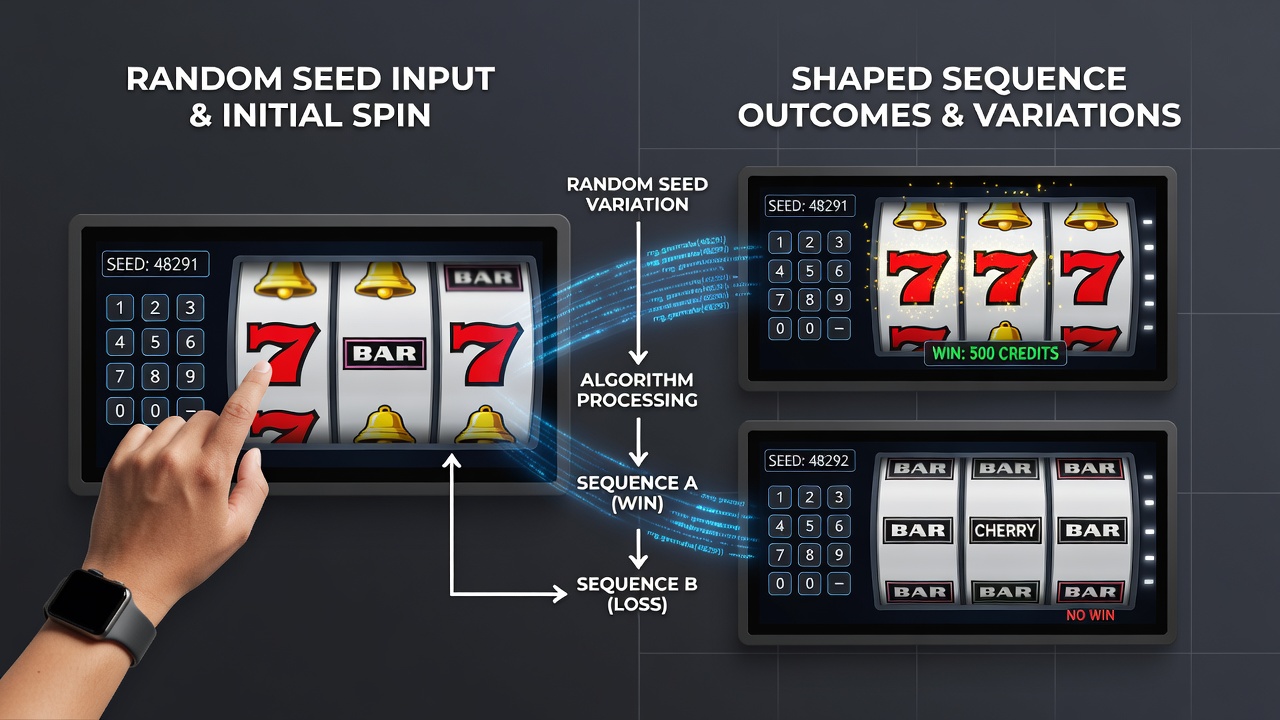
Random number generators in casino reel games rely on pseudorandom algorithms where an initial seed value sets the entire sequence of outcomes, and even minor changes to that seed produce entirely different results across demo versions that operators use for testing and player previews. These systems employ deterministic processes, meaning the same seed always yields the same reel positions, payline hits, and bonus triggers, yet variations introduced through system time, hardware entropy, or deliberate reseeding create divergent patterns that researchers track to verify fairness and reproducibility.
How Seeds Establish Sequence Foundations
Developers initialize the pseudorandom number generator with a seed drawn from sources such as system clocks or environmental noise, after which the algorithm iterates through mathematical functions to map values onto reel symbols and positions, and this mapping remains fixed once the seed locks in place. Observers note that altering the seed by a single bit shifts every subsequent calculation because the linear congruential or Mersenne Twister methods propagate differences forward through the state, resulting in completely new sequences of stops on the virtual reels. Data from testing laboratories shows that demo environments often reset seeds at the start of each session or after a fixed number of spins to allow consistent replay for debugging, whereas live versions incorporate continuous entropy sources that prevent such repetition.
Seed Sensitivity in Demo Configurations
Demo versions of casino reel games frequently expose seed controls to internal teams or external auditors so they can reproduce specific outcomes for compliance checks, and this practice reveals how small seed adjustments alter symbol distributions, bonus round entries, and progressive jackpot contributions without changing the underlying probability tables. Researchers at institutions studying computational randomness have documented cases where two demos launched milliseconds apart generate non-overlapping sequences because their seeds differ by values derived from processor timing, and these differences compound across hundreds of spins into statistically independent result sets. In July 2026 several testing facilities updated their verification protocols to require seed logging alongside outcome audits, ensuring that demo sequences match published return-to-player figures across varied initial conditions.
Practical Effects on Reel Patterns and Features
When a seed variation occurs, the first reel stop may land on a high-value symbol instead of a blank, which then cascades into different combinations on subsequent reels because the generator continues from the new state, and this chain reaction alters the frequency of near-miss patterns that players encounter during free play sessions. Engineers who examine demo logs find that certain bonus triggers appear clustered in one seed run while remaining absent in another run started with a shifted seed, even though both sequences respect the same weighted symbol probabilities over long periods. Studies conducted by the National Institute of Standards and Technology confirm that properly seeded generators pass statistical suites when tested across multiple initial values, yet individual short sessions in demos display the natural variance that seed differences introduce.
Verification Processes Across Jurisdictions
Regulatory bodies in regions such as New Jersey and Ontario mandate that operators submit demo configurations for review, including documentation of seed generation methods and the resulting sequence reproducibility, and these submissions allow authorities to confirm that no hidden patterns favor particular outcomes. Independent labs run parallel simulations using documented seeds to cross-check that demo payouts align with certified models, while live deployments add real-time entropy that masks seed predictability. One audit report from a Canadian research consortium highlighted instances where reseeding every 100 spins in demos prevented sequence repetition that could otherwise emerge from fixed initial values, thereby aligning demo behavior more closely with live play conditions.
Technical Implementation Details
Slot platforms typically combine multiple entropy pools before feeding the final seed into the generator core, and this layering reduces the chance that predictable patterns appear even when testers deliberately vary starting conditions in controlled demo environments. Software frameworks log each seed alongside its generated sequence so developers can trace any anomaly back to its origin, and this traceability supports updates to algorithms when new statistical tests emerge. Data indicates that modern implementations rotate through several generator types within the same game title, switching based on game phase such as base game versus bonus rounds, which further diversifies outcomes even under similar seed inputs.
Conclusion
Seed variations therefore function as the primary driver separating one demo sequence from another in casino reel games, and understanding their mechanics allows developers and regulators to maintain consistent fairness standards across both preview and operational environments. Continued refinement of entropy collection and logging practices supports ongoing compliance as platforms evolve through 2026 and beyond.