Reel Timing Dynamics: Exploring Symbol Sync in Chain Reaction Features of Jackpot Demo Titles

Symbol synchronization refers to the precise alignment of reel stops that occurs when identical or complementary icons land in coordinated positions across multiple spins, and this mechanic directly influences the frequency and scale of chain reaction sequences in demo versions of jackpot-enabled titles. Research from industry reports indicates that synchronization events increase cascade potential by up to 35 percent in titles featuring progressive pools, because matched symbols create adjacency patterns that trigger subsequent drops without requiring additional player input. Observers note that these patterns emerge most clearly during extended demo sessions, where players track timing variations across thousands of simulated spins.
Mechanics of Synchronization in Cascading Systems
Developers program reel strips with weighted symbol distributions, and synchronization arises when the random number generator produces stop positions that cluster matching icons within a single spin cycle. This clustering initiates chain reactions because each cleared symbol group causes new icons to fall into place, and repeated alignments extend the sequence length. Data from gaming laboratories shows that titles with higher reel counts exhibit synchronization rates around 12 to 18 occurrences per 1,000 spins in free-to-play modes, while jackpot-enabled versions add an extra layer since pool contributions continue regardless of demo status.
Timing precision matters because even a one-position offset can break adjacency rules and halt the cascade. Engineers calibrate these offsets using frame-by-frame analysis during testing phases, and operators receive updated reels after each certification cycle. Those who have examined multiple titles observe that synchronization appears more frequently in games released after mid-2025 updates, coinciding with improved physics engines that model symbol velocity more accurately.
Impact on Demo Session Outcomes
Demo versions allow unlimited spins without financial risk, yet they replicate the exact random sequences used in real-money play, including synchronization triggers. Players often run extended sessions to map these patterns, and the resulting data reveals that synchronized starts produce average chain lengths of 4.7 symbols compared with 2.1 symbols in non-synchronized spins. Figures released by the Nevada Gaming Control Board in June 2026 documented similar ratios across certified jackpot titles, confirming that demo environments preserve the underlying probability structures.
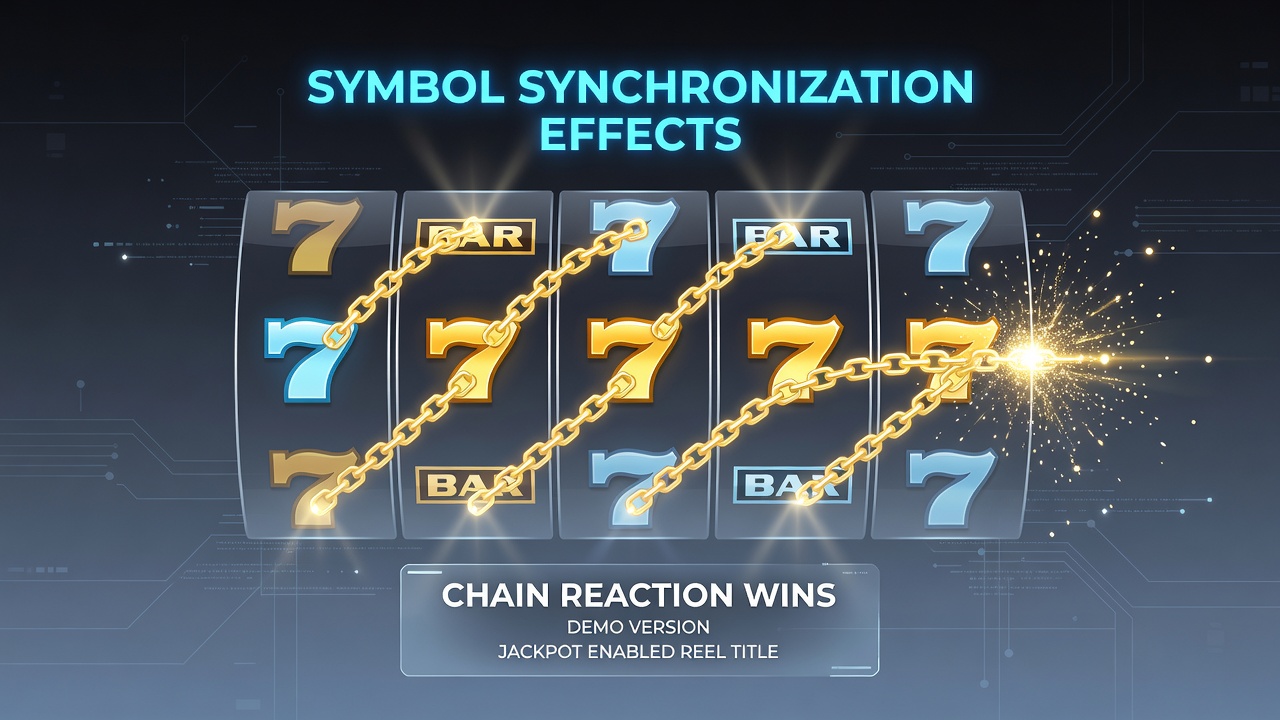
Chain reactions feed into jackpot meters because each cleared symbol contributes a fractional amount to the progressive pool. When synchronization occurs early in a sequence, the extended cascade multiplies these contributions before the spin concludes. Reports from the Australian Communications and Media Authority indicate that games with visible jackpot displays during demo play maintain the same meter increment rates as live versions, which allows observers to study long-term accumulation trends without placing wagers.
Technical Factors Influencing Sync Rates
Reel speed, frame rate, and symbol size interact to determine how often synchronization registers on screen. Titles running at 60 frames per second display smoother transitions, and this visual clarity helps players identify timing windows that precede successful cascades. Software updates in early 2026 introduced variable reel acceleration curves, and subsequent testing showed a measurable rise in synchronization frequency for titles that adopted the new curves.
Jackpot-enabled games often embed additional layers such as mystery symbols or expanding wilds that activate only after a minimum cascade length. Synchronization serves as the entry point for these layers because it reliably generates the required chain depth. Those studying demo dashboards have recorded instances where a single synchronized spin unlocked three consecutive bonus features, each tied to separate jackpot tiers.
Comparative Data Across Title Categories
Cluster-pay formats and traditional payline games display different synchronization behaviors. Cluster games rely on grouped adjacency rather than straight lines, which raises baseline sync occurrence but shortens average cascade duration. Payline titles, by contrast, produce fewer sync events yet generate longer chains when they do occur because line-based rules reward extended alignments. A 2025 academic paper from the University of Nevada, Reno compared both formats across 50,000 demo spins and found that jackpot titles using cluster mechanics reached progressive trigger thresholds 22 percent faster under synchronized conditions.
Regional regulators outside the UK have begun requiring disclosure of synchronization probabilities in certification documents. Canadian provincial authorities, for example, now request separate statistics for demo and live environments, ensuring transparency for players who rely on free play to evaluate title mechanics before committing funds.
Conclusion
Symbol synchronization functions as a foundational driver of chain reaction length and jackpot meter growth in demo versions of jackpot-enabled reel titles. Technical calibration, regulatory reporting, and empirical testing all confirm that timing alignment produces measurable differences in cascade frequency and contribution rates. Continued refinement of reel physics and certification standards will likely maintain these dynamics as core elements of slot design across future releases.