Reel Animation Timing: Directing Player Decisions in Extended Portable Device Sessions
Written by Anna Berger · Aug 7, 2026

Reel Animation Timing: Directing Player Decisions in Extended Portable Device Sessions
Reel animation timing in mobile slot games sets the rhythm for each spin cycle, and this pacing directly shapes how players evaluate outcomes before committing to the next action on portable screens. Developers adjust spin durations, reel stop sequences, and transition speeds to match smaller device interfaces, where touch responses and visual feedback occur in tighter windows than desktop setups. Data from mobile gaming platforms shows that shorter animation intervals often correlate with faster re-engagement rates during sessions lasting beyond thirty minutes.
Core Elements of Reel Animation Timing
Animation timing encompasses the duration from spin initiation to final reel settlement, the intervals between individual reel stops, and any acceleration or deceleration effects applied to symbol movement. Portable devices introduce variables such as screen refresh rates and processor load that alter perceived timing compared with stationary hardware. Observers note that when reels settle in under two seconds total, players tend to initiate follow-up spins with minimal delay, whereas timings extending past three seconds create brief windows for outcome review that can interrupt momentum. Research from the International Gaming Institute at the University of Nevada indicates these patterns hold across multiple device types when session length exceeds one hour.
Mobile Interface Factors Affecting Timing Perception
Portable screens compress visual information, so animation speeds must compensate for reduced viewing angles and potential distractions from notifications or battery indicators. Touch-based inputs allow immediate spin commands once reels halt, yet the physical act of tapping requires users to lift attention from the animation sequence itself. Studies tracking eye movement on tablets reveal that players fixate longer on symbols when reel stops incorporate staggered timing rather than simultaneous halts, and this extended gaze correlates with altered bet sizing choices in subsequent rounds. August 2026 brought updated mobile operating systems that standardize frame rates at 120 hertz, which in turn allows smoother reel motion without increasing overall animation length.
Decision Pattern Shifts During Prolonged Play
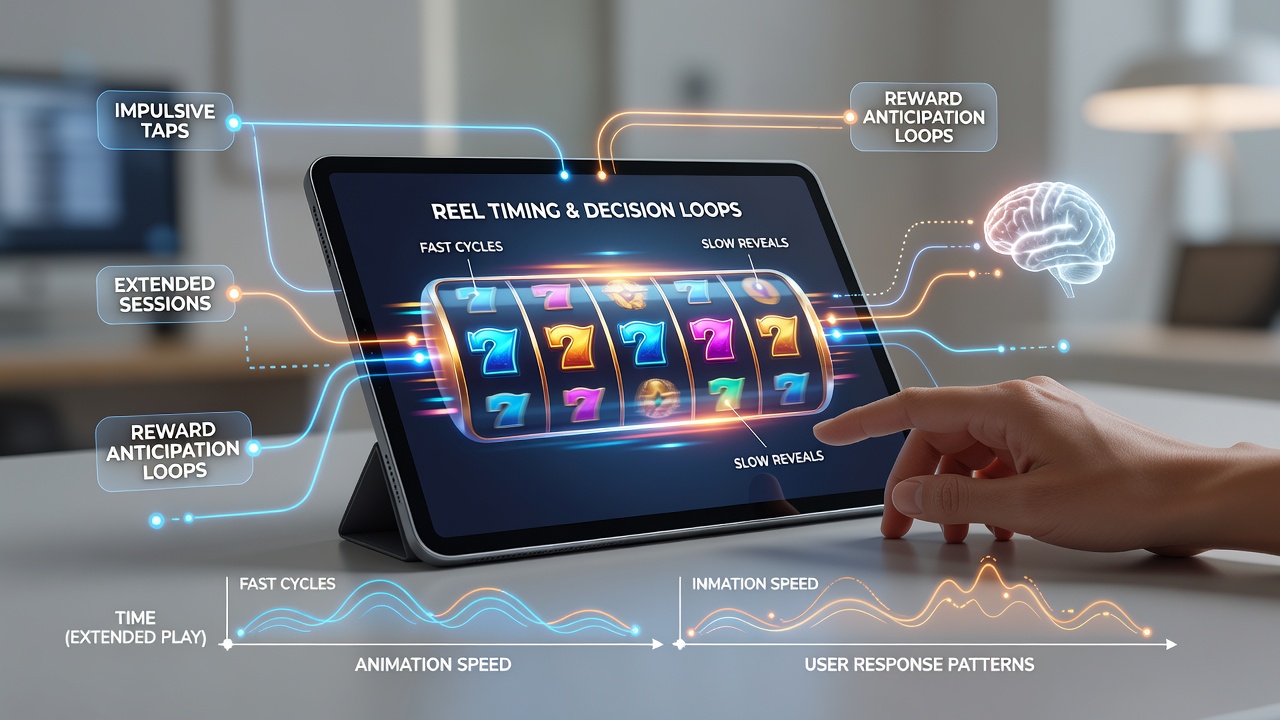
Extended sessions on portable devices often feature repeated exposure to the same animation cadence, and this repetition can condition players to anticipate specific stop timings. Faster reel animations paired with quick audio cues encourage continued play by reducing the interval available for external interruption, while slower sequences provide space for players to adjust stake levels or exit the game. Figures from Canadian provincial gaming reports demonstrate that sessions exceeding ninety minutes show increased frequency of micro-bet changes immediately after animations that pause for symbol highlight effects. These adjustments occur more often on smartphones than tablets, where larger displays dilute the impact of timing variations.
Interaction Between Timing and Outcome Evaluation
When reel animations incorporate variable speeds across individual reels, players receive staggered information that influences whether they perceive a near-complete combination before the final symbol settles. This sequencing affects risk assessment because the brain processes partial results while the last reel continues moving, and portable device latency can extend or shorten that processing window. Academic analyses from the Australian Gambling Research Centre link staggered timing to higher rates of continued spinning without stake modification, particularly when total animation duration stays consistent across multiple spins. Device orientation further modulates these effects, since landscape mode on phones alters the visual weight of moving symbols compared with portrait use during extended periods.
Platform-Specific Timing Adjustments Observed in 2026
Software updates released in August 2026 refined animation engines for several major mobile slot providers, and these changes standardized reel stop intervals across different hardware generations. Data collected from operator dashboards shows reduced variance in session length when animations align with device-native refresh capabilities rather than overriding them. Players on older portable units experience longer perceived animation times due to frame drops, which in turn shifts decision points toward more conservative betting after the first hour of continuous play. Industry tracking from European gaming associations confirms that these hardware-dependent timing differences persist even when game logic remains identical across platforms.
Conclusion
Reel animation timing functions as a structural element that guides sequential choices throughout extended mobile sessions by controlling the pace at which outcomes become available for evaluation. Portable device constraints amplify these timing effects because screen size, input method, and system performance interact with animation parameters in measurable ways. Evidence from multiple regulatory regions and academic sources establishes consistent relationships between spin duration, reel settlement order, and subsequent player actions without relying on subjective interpretation. Continued monitoring of hardware advancements will clarify how future timing refinements continue to shape decision sequences on portable platforms.