Mapping Networked Accumulators That Pool Rewards Across Mobile and Desktop Slot Platforms
Written by Greta Simmons · Aug 11, 2026

Mapping Networked Accumulators That Pool Rewards Across Mobile and Desktop Slot Platforms
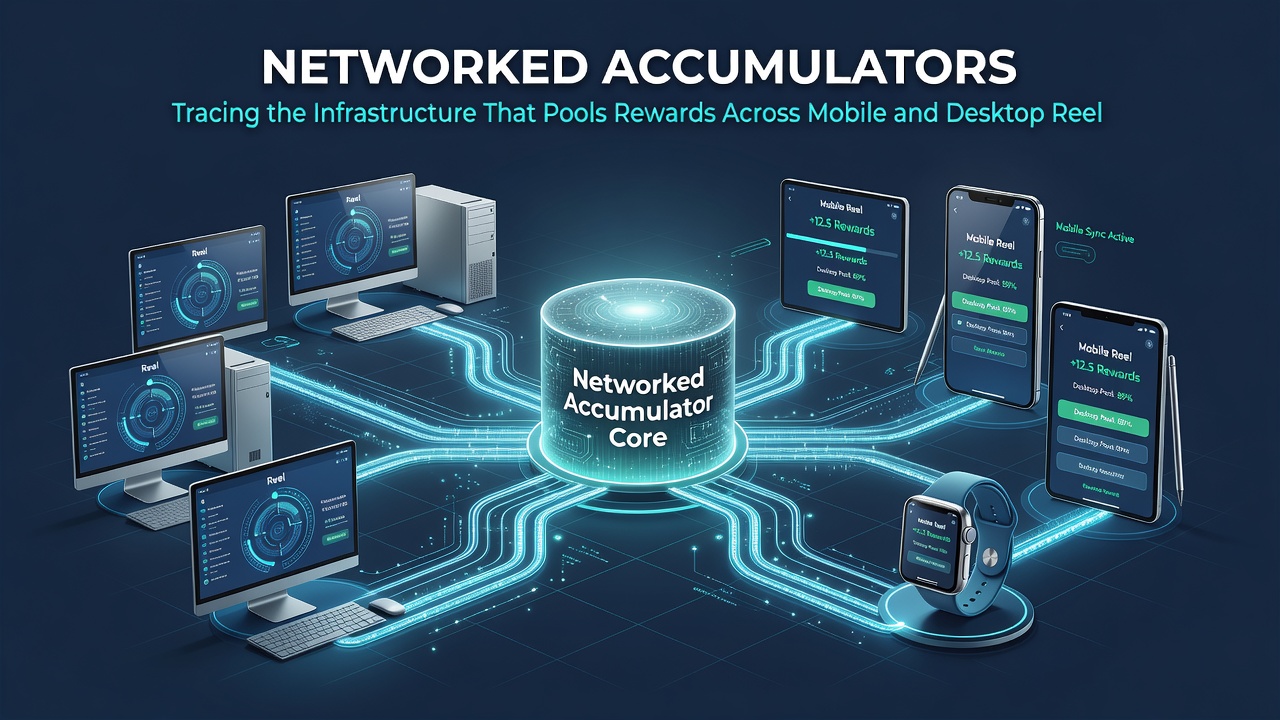
Networked accumulators function as centralized systems that collect small contributions from individual wagers on reel platforms, then combine those amounts into shared reward pools available to players on both mobile applications and desktop interfaces. These structures operate through synchronized databases that update contribution rates in real time, allowing a spin on a phone to increment the same jackpot total visible on a computer screen. Data from industry reports indicate that such pooling mechanisms appeared in commercial slot systems as early as the mid-1990s, yet their scale expanded significantly once mobile connectivity became widespread.
Core Mechanics of Accumulator Networks
Each wager placed on a participating game transfers a fixed percentage, often between 0.5 and 2 percent, into one or more accumulator accounts managed by the operator or a third-party network provider. The accounts track contributions separately for local jackpots and wider progressive pools, while reconciliation engines ensure that mobile sessions and desktop sessions feed into identical totals. When a qualifying combination appears, the system releases the accumulated sum according to predefined rules stored in the game server. Observers note that this architecture reduces duplication of infrastructure because one central ledger serves every device type rather than maintaining separate pools for each platform.
Cross-Device Synchronization Processes
Operators achieve consistency across devices by routing all game outcomes through a single remote gaming server that timestamps every transaction and applies the same accumulator logic regardless of whether the request originates from a mobile operating system or a desktop browser. Session tokens carry player identifiers and device metadata, enabling the server to apply any jurisdictional restrictions or bonus multipliers uniformly. In August 2026 several major networks reported uptime rates above 99.8 percent for these synchronized services, according to figures released by the International Gaming Standards Association. The same reports showed that mobile traffic accounted for roughly 68 percent of total accumulator contributions during peak hours, while desktop play contributed the remaining share, yet both segments drew from identical prize pools.
Technical Components Supporting Pooled Rewards
Behind the scenes, networked accumulators rely on redundant database clusters, secure API gateways, and cryptographic verification modules that confirm each contribution before it updates the visible total. Load-balancing algorithms distribute requests so that simultaneous mobile and desktop activity does not create latency in jackpot displays. Research conducted by the University of Nevada, Las Vegas Center for Gaming Research has documented how these systems incorporate automated failover procedures that reroute traffic within milliseconds if one node experiences disruption. Such measures keep progressive meters accurate even when thousands of sessions occur across different device classes at once.
Regulatory and Compliance Considerations
Regulatory bodies in multiple jurisdictions require operators to submit detailed logs of accumulator activity, including contribution rates, pool balances, and payout events. In Canada the Alcohol and Gaming Commission of Ontario mandates monthly reconciliation reports that verify mobile and desktop contributions match declared totals. Similar requirements exist in Australia where state gaming authorities conduct periodic audits of progressive systems. These oversight practices ensure that pooled rewards remain transparent and that any cross-platform discrepancies receive prompt investigation. Operators must also maintain segregated accounts for player funds and jackpot reserves, a separation that independent testing laboratories verify before platforms receive certification.
Future Developments in Accumulator Infrastructure
Technology providers continue to refine accumulator networks by introducing distributed ledger elements that record every contribution on an immutable chain while still preserving the speed required for live gameplay. Pilot programs launched in 2025 demonstrated that hybrid models combining traditional databases with selective blockchain entries could reduce reconciliation times by 40 percent. Industry associations have begun publishing interoperability guidelines so that games developed for one operator's mobile platform can connect seamlessly to accumulator pools managed on desktop-focused networks. These guidelines emphasize standardized message formats and encryption protocols that maintain security across device boundaries.
Conclusion
Networked accumulators represent a foundational layer of modern reel platforms because they enable shared reward pools that function identically whether accessed through mobile applications or desktop interfaces. The infrastructure combines real-time contribution tracking, synchronized servers, and regulatory reporting mechanisms that together maintain fairness and accuracy. As device usage patterns shift and new compliance standards emerge, the same core architecture continues to adapt while preserving the essential function of pooling contributions into visible, accessible rewards for players on every supported platform.