Layered Boost Systems Fueling Prize Growth in Mobile Reel Games
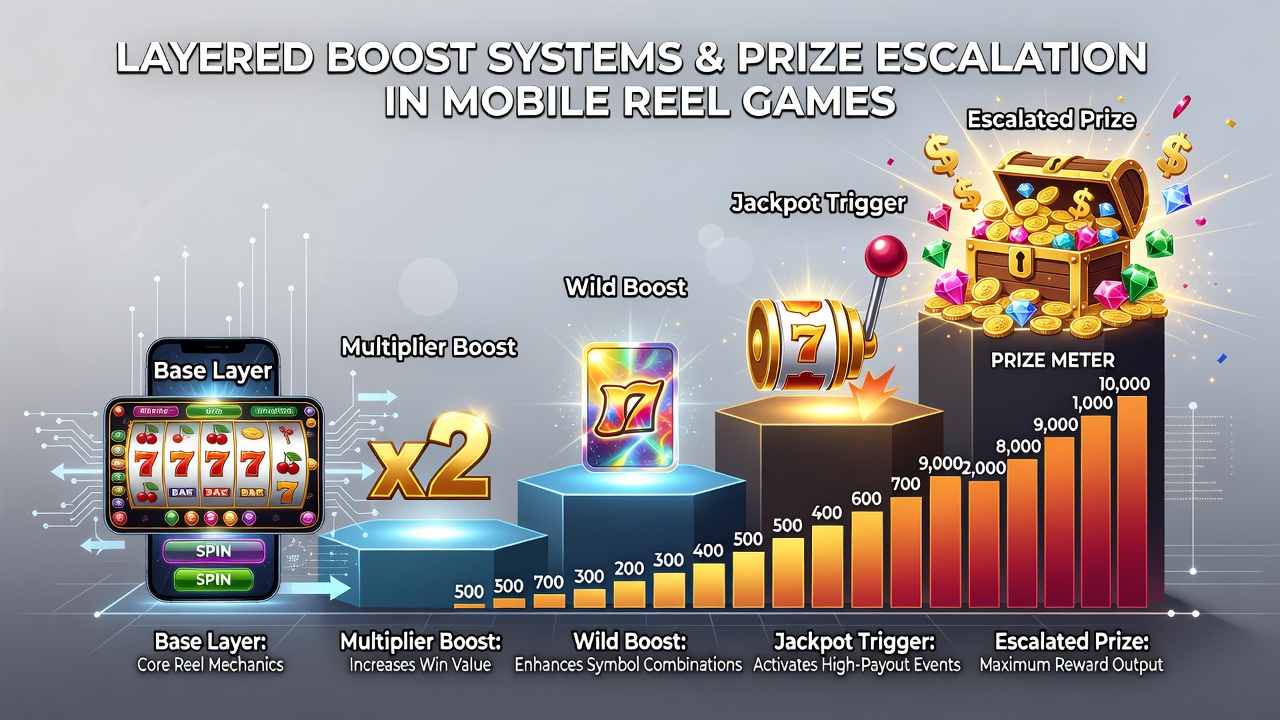
Layered boost systems operate through sequential activation stages that accumulate multipliers, free spin allocations, and symbol enhancements across successive spins in mobile reel games. These mechanisms differ from single-tier features by requiring players to progress through distinct phases where each completed layer unlocks additional value before the next stage engages. Industry data collected across multiple operators shows that games incorporating three or more layers record higher average prize values per session compared with standard formats.
Developers integrate these systems by assigning base triggers such as specific symbol combinations or meter fills that initiate the first layer. Once active, subsequent spins contribute toward the second layer while preserving the initial boost, and this stacking continues until players reach the uppermost tier. Research from the University of Nevada, Las Vegas International Gaming Institute indicates that such progression structures extend session duration because participants pursue the next threshold rather than ending play after an initial reward.
Mechanics Behind Layer Accumulation
Each layer typically modifies reel behavior in targeted ways. The initial stage might add wild symbols or increase reel height, whereas the second layer introduces expanding symbols or additional paylines. The final tier often combines prior effects with a global multiplier applied to all line wins. Because layers remain active simultaneously once unlocked, total payout potential grows exponentially rather than additively. Mobile platforms display these changes through persistent on-screen meters that update in real time, allowing players to track progress without interrupting the spin sequence.
Game designers calibrate layer thresholds to balance accessibility with long-term engagement. Lower layers activate after modest symbol counts, while higher layers demand sustained sequences that may span dozens of spins. This calibration draws from player behavior analytics supplied by platform providers, ensuring that progression feels attainable yet rewarding enough to maintain interest through multiple sessions.
Impact on Prize Distribution Patterns
Layered systems alter prize frequency curves by concentrating larger outcomes in fewer but more substantial wins. Data compiled by the American Gaming Association reveals that titles featuring layered mechanics produce top-decile payouts at rates 18 to 27 percent higher than comparable games without tiered progression. The escalation occurs because each layer multiplies the output of previous stages rather than resetting after each feature concludes.

Operators report that these structures also influence jackpot contribution rates. When layers reach maximum capacity, a portion of each wager may feed into progressive pools at accelerated speeds. In June 2026 several European and North American studios released mobile titles where the uppermost boost layer directly increased progressive seed amounts, creating visible jumps in jackpot displays during live play. Such integrations demonstrate how layered mechanics extend beyond base game payouts into network-wide prize structures.
Regional Regulatory Observations
Authorities in multiple jurisdictions track these systems as part of broader responsible gaming frameworks. The Nevada Gaming Control Board requires operators to disclose layer probabilities in game rules so players understand progression odds before engaging. Similar transparency mandates appear in Australian state guidelines, where published reports emphasize clear meter explanations to prevent misconceptions about near-miss patterns during layer building phases.
Academic analyses published in the Journal of Gambling Studies further examine how layered progression affects player decision-making. One longitudinal review of mobile session logs found that participants who reached the second layer continued spinning at higher rates than those who exited after the first layer, even when net returns remained comparable. These patterns emerge consistently across different demographic segments and device types.
Technical Implementation in Mobile Environments
Mobile reel games leverage device sensors and touch interfaces to visualize layer advancement through animated meters and haptic feedback. Developers optimize these displays for varying screen sizes so progression indicators remain legible whether players use phones or tablets. Server-side tracking ensures that layer states persist across interrupted sessions, allowing users to resume exactly where they left off after network reconnection.
Integration with cloud-based analytics platforms enables real-time adjustment of layer parameters based on aggregate performance metrics. When data shows that a particular layer threshold produces unexpectedly low activation rates, studios may issue updates that slightly lower the requirement while preserving overall prize mathematics. These adjustments occur within regulatory approval windows and maintain documented audit trails.
Conclusion
Layered boost systems represent a structured approach to prize escalation that relies on sequential activation and persistent stacking rather than isolated features. Evidence from regulatory disclosures, academic research, and industry analytics demonstrates measurable effects on payout distributions and session behavior across mobile reel titles. Continued refinement of these mechanics, particularly around transparent communication and cross-device consistency, shapes how future games balance engagement with regulatory expectations in markets worldwide.